

Sora is gone: what the 2026 AI video shake-up means for brand videos
10 November 2026
Current news (as of 10 November 2026)
What happened
Two of the best-known names in AI video changed course this year.
OpenAI says on its help centre that the Sora web and app experiences were discontinued on 26 April 2026, and that the Sora API followed on 24 September 2026. OpenAI's help article points users to an export page to download their past work.
Google, meanwhile, lists its Veo 3.1 preview model IDs in the Gemini API (veo-3.1-generate-preview, veo-3.1-fast-generate-preview and veo-3.1-lite-generate-preview) with a shutdown date of 22 October 2026 on its developer deprecations page, and names a recommended replacement model. Note the detail: that page is about preview model IDs in the developer API. Google offers its video models through several products, so availability depends on which product and plan you use.
Neither change means AI video is going away. Plenty of tools remain on the market. What these changes show is how quickly a specific tool, model name or API can disappear.
Why this matters if you commission video
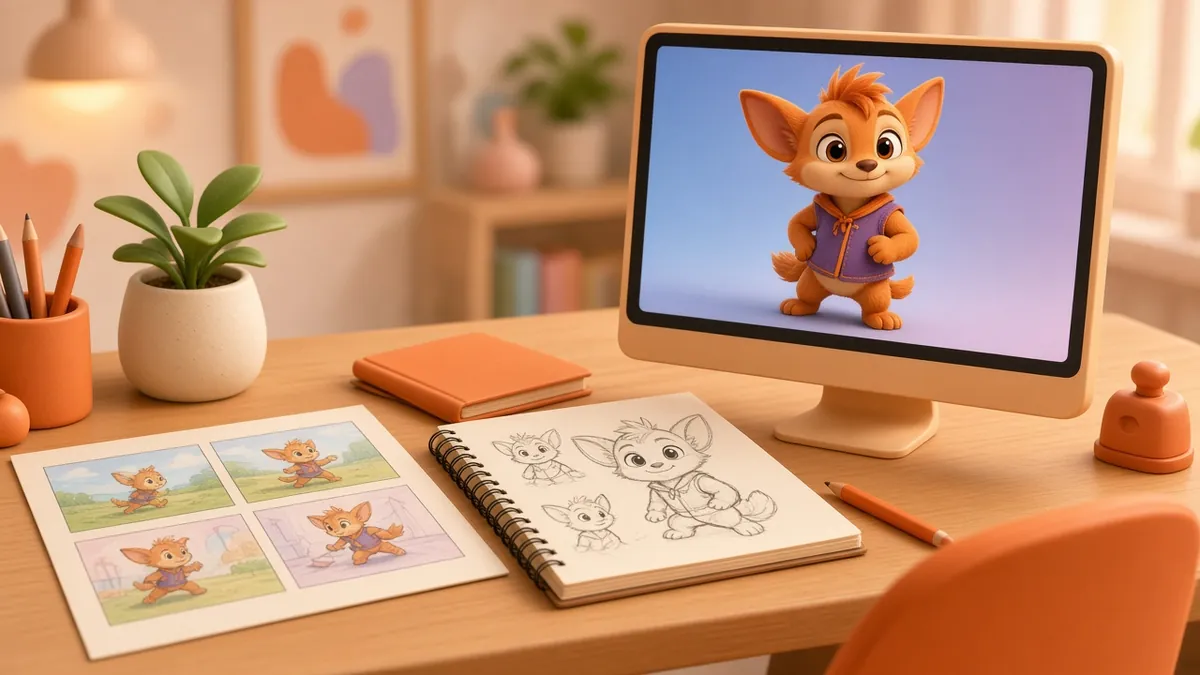
Teams that test AI clips for social posts, pitch decks or product teasers sometimes build repeatable workflows around one model. If that model is retired, three things can break at once:
- Look and consistency. A replacement model will not reproduce the same characters, lighting or motion style. Series content that depended on a specific look has to be re-established.
- Files and rights records. If your source generations lived inside a platform that closes, you need your exports, prompts and licence terms saved somewhere you control.
- Pipelines and budgets. Automations that called a retired API stop working, and cost planning based on old pricing no longer applies.
A more durable way to use AI in animation
A sensible approach is to treat AI as one set of tools inside a production pipeline, not as the pipeline itself. A few practical habits can help protect a project from tool churn:
- Own the assets that define your brand. Characters, logos, product models and colour palettes should exist as real design files and 3D assets that any artist or tool can work from. A rigged 3D product model or a character sheet does not expire when a website closes.
- Use AI where swapping tools is cheap. Ideation, mood boards, rough animatics, background variations, temp voice and clean-up are good fits. If one tool goes away, the work it produced is still usable and the step can be redone with another tool.
- Keep a record. For every AI-assisted shot, keep the exported file, the tool and model name, the date, and the terms that applied. This helps with disclosure rules (YouTube, for example, asks creators to disclose realistic AI content) and with client approvals.
- Lock the final look in a controllable format. For hero shots, a 3D scene or a layered 2D file gives you precise control over timing, framing and revisions, which a text prompt alone cannot guarantee.
What to ask your video partner
If you are briefing an agency or studio in 2026, it is reasonable to ask:
- Which parts of this project use generative AI, and which tools?
- If a tool changes, can you still revise the video in six months?
- Who owns the source files, and will they be handed over?
- How will realistic AI elements be disclosed where a platform requires it?
Clear answers to these questions matter more than which model is popular this month.
The takeaway
The Sora shutdown and the Veo preview retirement are reminders that AI video tools move fast. Brands get the most lasting value when AI speeds up a pipeline built on owned assets, clear records and human creative direction.
Planning an animated or 3D video? Contact Supreme Animation to discuss your brief.
Sources
- OpenAI Help Center, "What to know about the Sora discontinuation" (dates stated: app 26 Apr 2026, API 24 Sep 2026; page checked 10 Nov 2026)
- Google, Gemini API "Deprecations" page (Veo models table lists veo-3.1-generate-preview, veo-3.1-fast-generate-preview and veo-3.1-lite-generate-preview with shutdown date 22 Oct 2026; page fetched directly 10 Nov 2026 via ai.google.dev, which redirects here)